02/21/20: Crystalborne: Fate of Heroes Review (Part 1-Systems Breakdown)

Welcome back! This week I will begin diving into Crystalborne: Fate of Heroes, by Machine Zone. For the next few weeks I will dive into different aspects of the Game to see what design learnings there are to gleam as well as whether the game is destined to be a hit. This week, I look at the systems Players will engage with to optimize Heroes.

We’ve seen 4x Games appropriate RPG mechanics for awhile now.  But can 4x Mechanics go into an RPG? That is Machine Zone’s Gambit in Crystalborne: Heroes of Fate. Crystalborne has the typical systems you often see in the RPG Genre (think RAID: Shadow Legends): Hero Rarity, Tier, Level, Equipment, and Skills are all here.  Infusion, a craft-based stat-boosting system, plays nicely with MZ’s penchant for robust itemization in it’s games.  Here is a brief description of each system as well as the long-term economy implications that system brings:

Hero Rarity, Tier, and Level
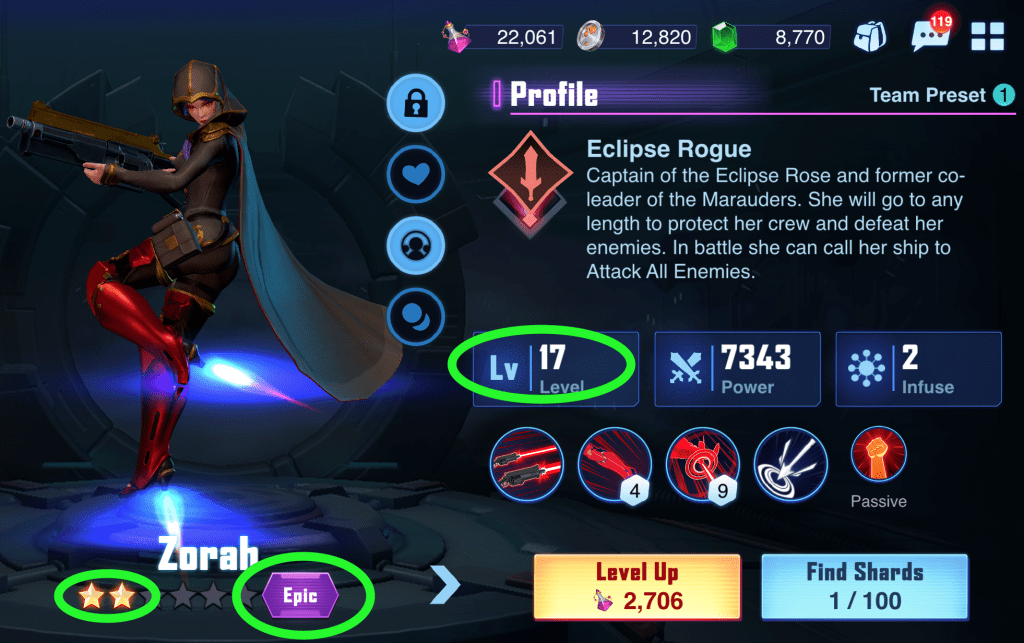
All Heroes have a Tier (Number of Stars), a Level, and a Rarity.

Increasing a Hero Level provides an increase in some basic Hero stats. It costs Hero XP to increase a Hero’s Level. Heroes can also earn XP when they fight in PvE and Bounties.
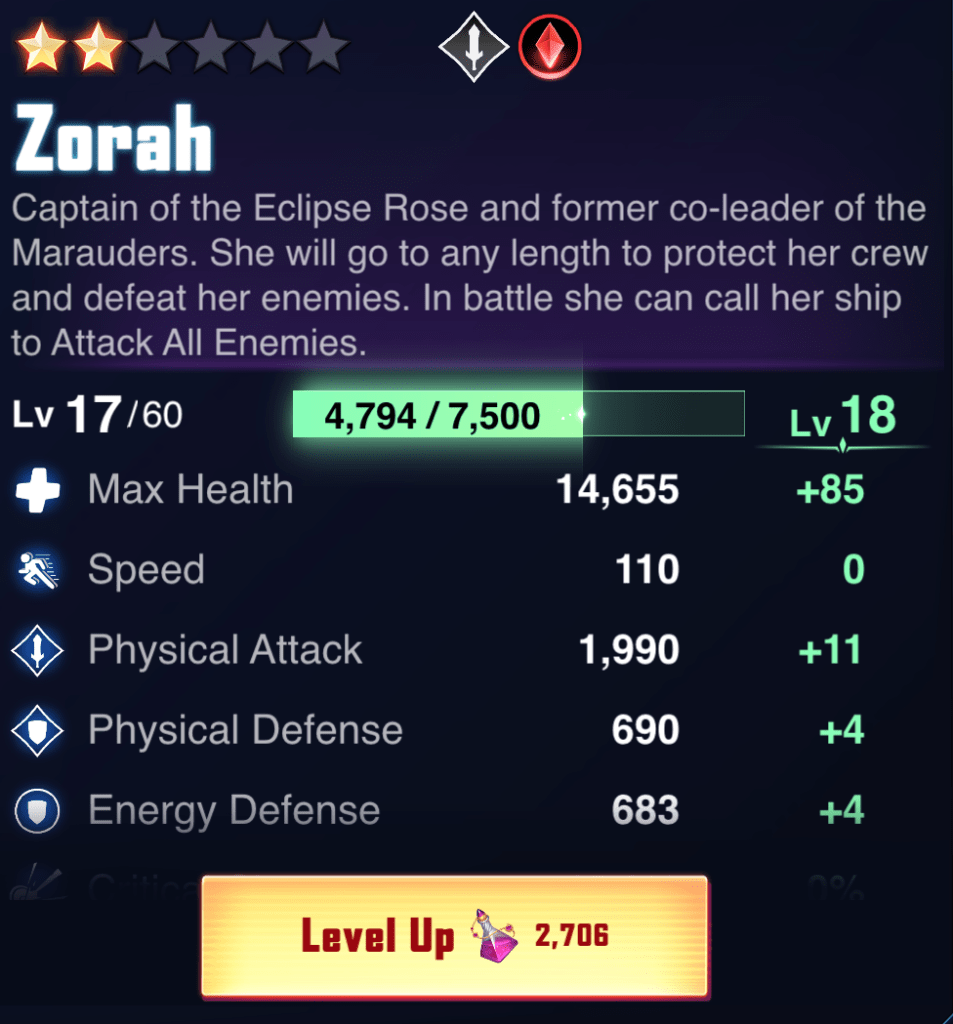
When a Hero hits the Max Level, the Player is prompted to Rank Up the Hero.
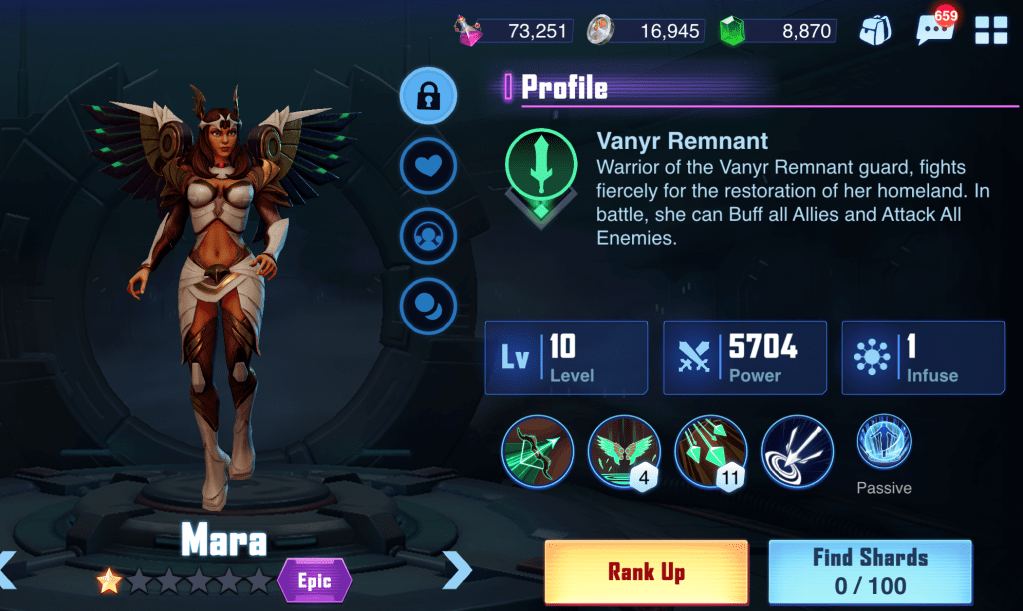
Tapping on Rank Up brings the Player to a screen where Players must sacrifice both Heroes and pay Silver. This is pretty much 1:1 with RAID: Shadow Legends.
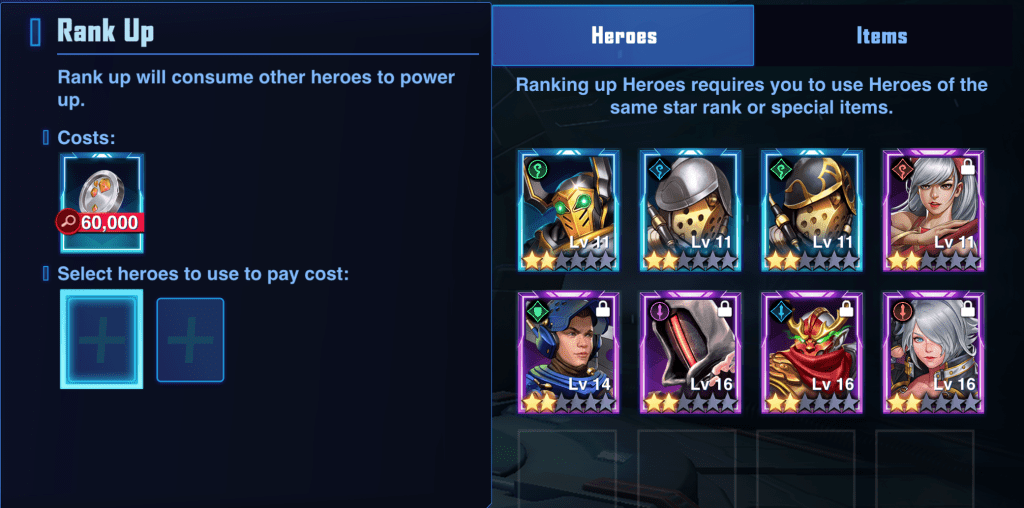
It is fair to say that Crystalborne hasn’t really changed anything on this front. Though I need to point out the inherent dangers of relying on this type of Hero Depth for MZ. We’ve seen many an RPG monetize off of these Hero Systems in a fairly steady way. But one key difference between other RPGs and Crystalborne is the Inflationary sale strategy that MZ notoriously utilizes in it’s games. Just see these two examples of Sales from Crystalborne: Fate of Heroes and RAID: Shadow Legends:
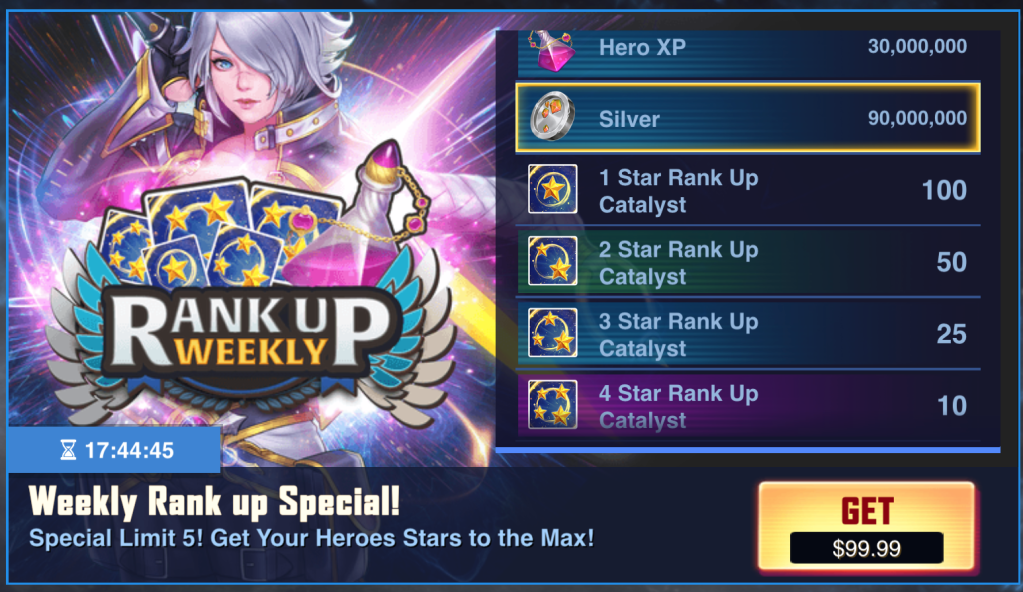
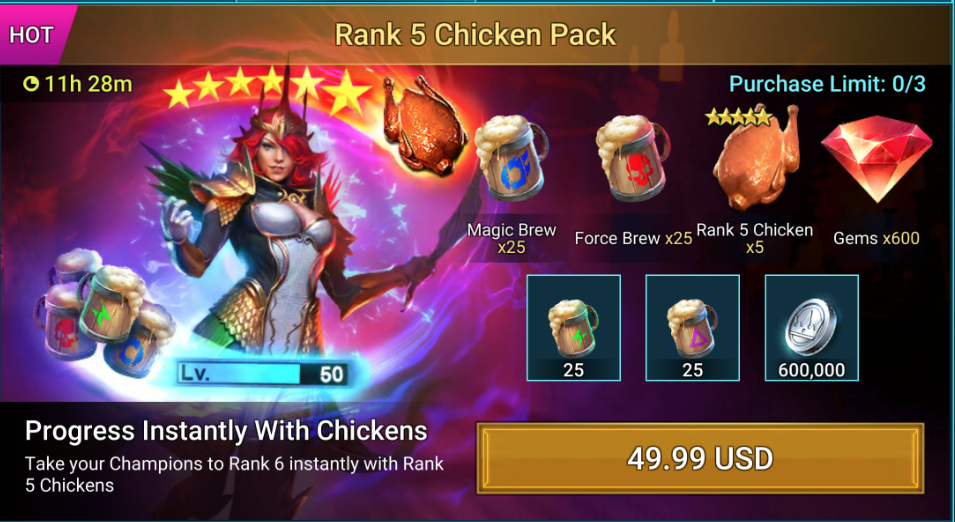
While Crystalborne Sales give out great value, the value is for multiple systems, not just the core system the Sale is supposed to target.

RAID’s Rank 5 Chicken Pack gives value mainly for the core system that the sale targets. Everything else RAID Sales give is not of great value.

On the surface, RAID’s $49.99 Rank 5 Chicken Pack provides more value than the $99.99 Rank Up Weekly Pack, at least when it comes to ranking up Heroes. But that’s where the value ends for the RAID Pack. The Hero XP Items, Gems, and Silver are not particularly note-worthy.

The same cannot be said of Crystalborne’s Rank Up Pack. The amount of Hero XP and Silver is considerable. A purchase of the $99.99 Rank Up Pack will give the Player significant resources to pursue other systems besides Ranking Heroes up. Unless there is incredibly more depth in the elder balance of these systems, heroes will be fully optimized with considerably less spend than in RAID or equivalent RPGs.

4x Games don’t have this problem typically, since content and depth can more easily be added in many 4x Systems than they can in RPG Hero Systems. This explains MZ’s design decisions with these next features….

Of Airships and Research Decks

You don’t have to play Crystalborne long to see two features that are mainstays of the 4x Genre: Base Building and Research.
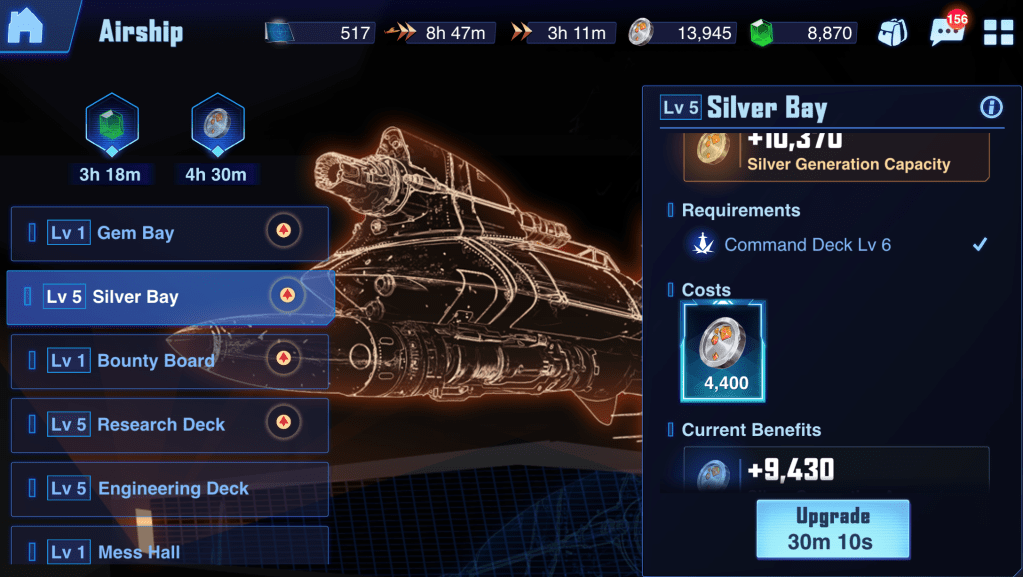
Base Building is now menu-based!

On the surface, the Airship is just a menu-driven base-building system. One might wonder why include such a system in an RPG? Base-Building as a system offers a couple advantages:
1. Provides Players with a Passive Resource Income. Its always useful for Players to get some things when they return to the game. But there are simpler systems that can accomplish this.
2. Manages systems. Upgrading Buildings can unlock, update or improve things other systems. This can be useful in helping shape and navigate the Player experience through optimizing their Heroes. But again, there are simpler ways to accomplish them (and MZ utilizes some of those way to great effect elsewhere).
3. Provide Bonuses. Upgrading Buildings can grant Hero and Economic Bonuses. Many of the options in the Airship do just this.
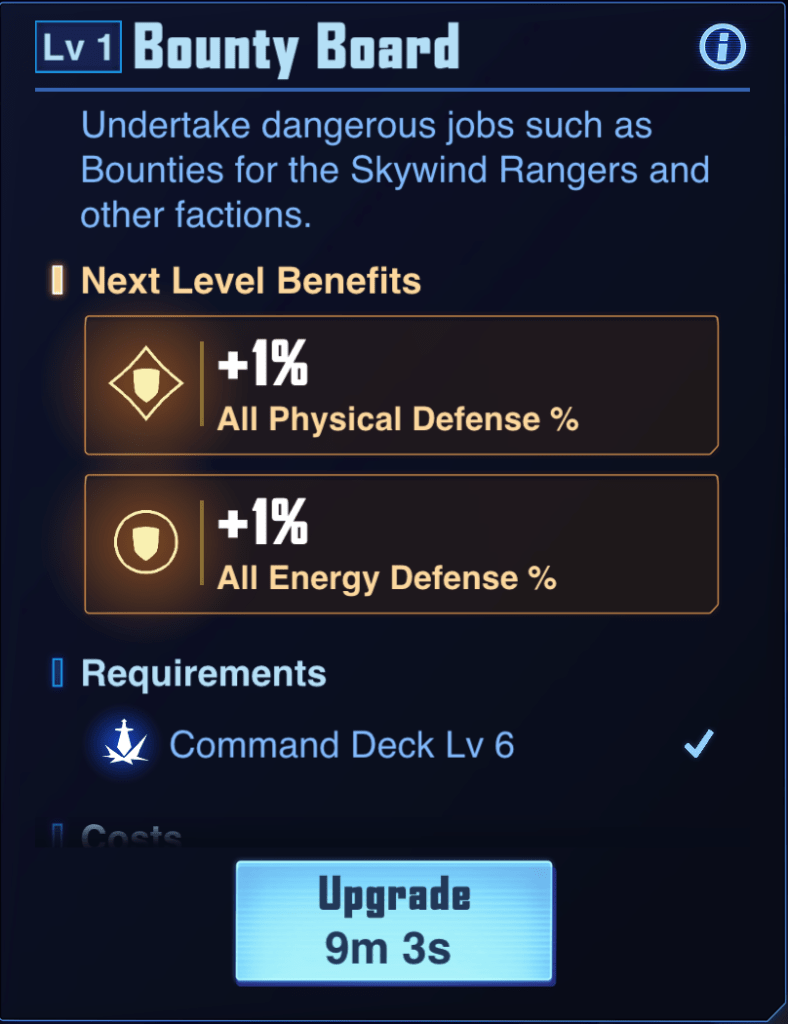
Again, this is useful, but so many other Systems do this. Including the Research Deck:
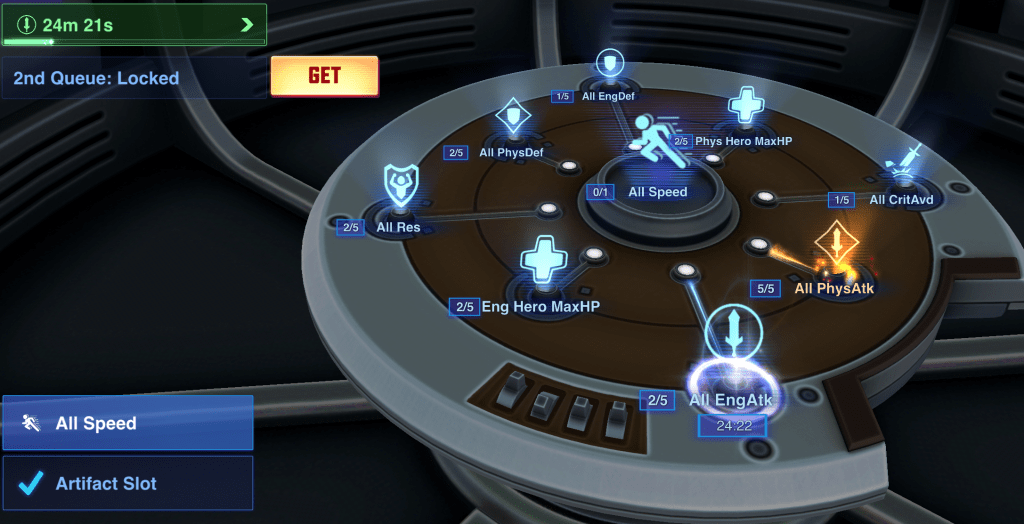
MZ pruned the Research Tree structures of 4x Games Past and adopted a cleaner, easily expandable Research system.

MZ’s brand new UI implementation for Research doesn’t hide the fact that Research is just a system to convert silver, research inputs, and time into permanent bonuses. Players get many more options of what to Research, and there is an end bonus once the whole Tier has been researched. The utility of bonuses acquired through upgrading the Airship pales in comparison to bonuses earned through Research.

So we are back to the original question: Why have an Airship in the first place when other, simpler systems can achieve the same thing? Because MZ needs more depth in the game to feed its over-valued sales, and Base-Building and Research are an easy means of achieving Depth. Traditional Hero Systems weren’t designed to absorb MZ-style value from Sales. And as of now, I haven’t identified anything that could sustain monetization for the long run.

And because I don’t want Part 1 of my Crystalborne Analysis on a sour note….

The Infusion System is a nice addition to Heroes, and is in complete alignment with MZ’s use of Itemization.
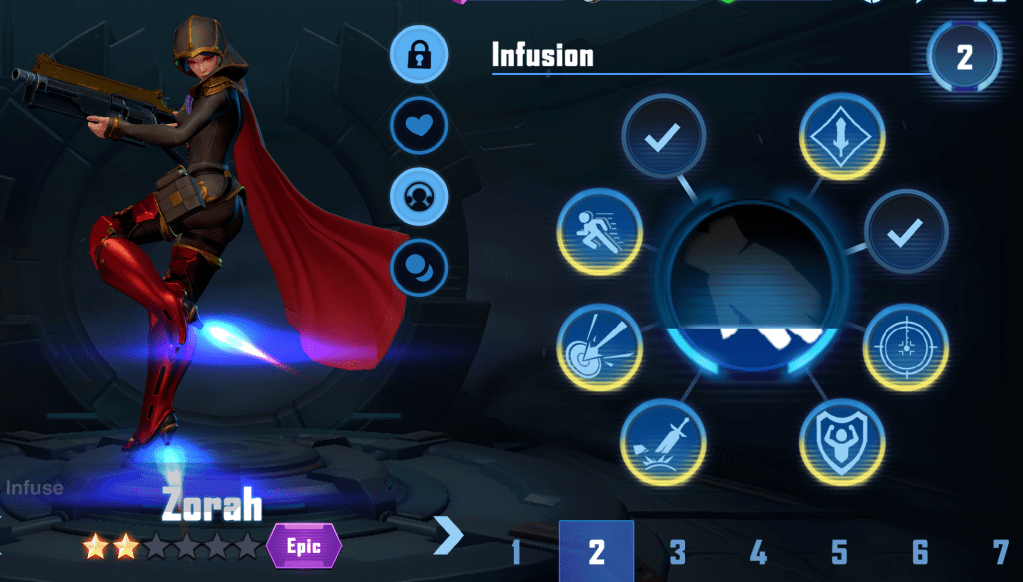
Purchasing all 8 Infusions unlocks the center Bonus/Reward

The gist of infusions is pretty simple: Craftable Items + Infusion Currency + Silver = Permanent Hero Stat Bonus. Completing all 8 Purchases gives you a significant reward at the end. There are multiple tiers of Infusions, so it seems like its easy to add content too. Pretty simple, huh?
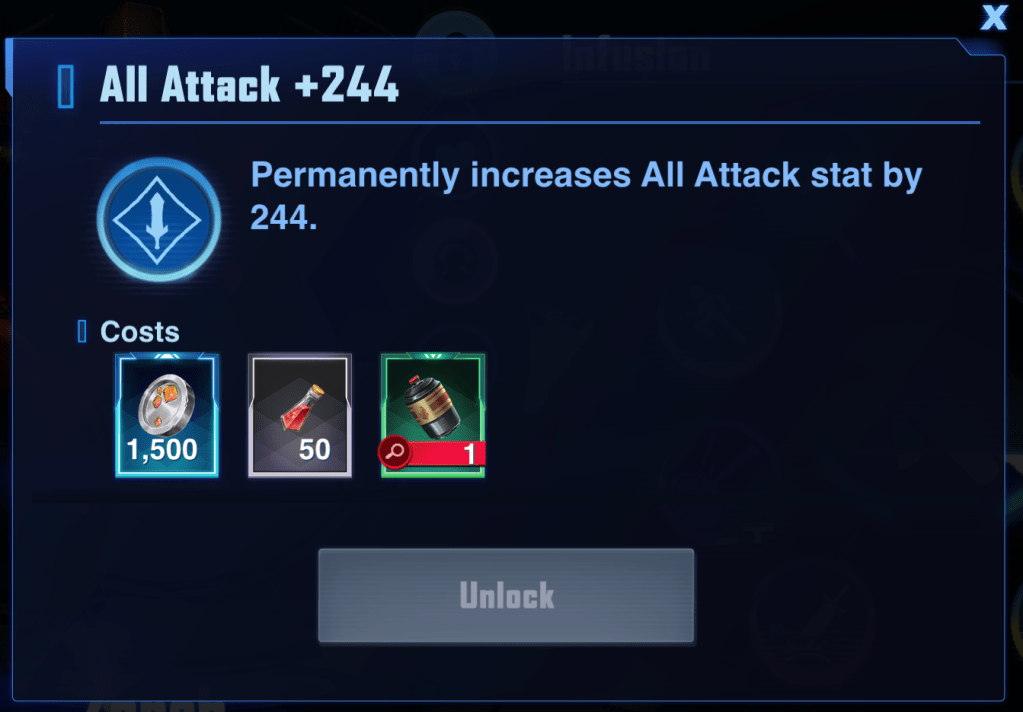
The item at the end can be crafted from other items or Purchased as part of Packs.

These Items can be crafted from other Items, giving Crystalborne a lot of potential in adding depth through Crafting Recipes for Infusion Items.
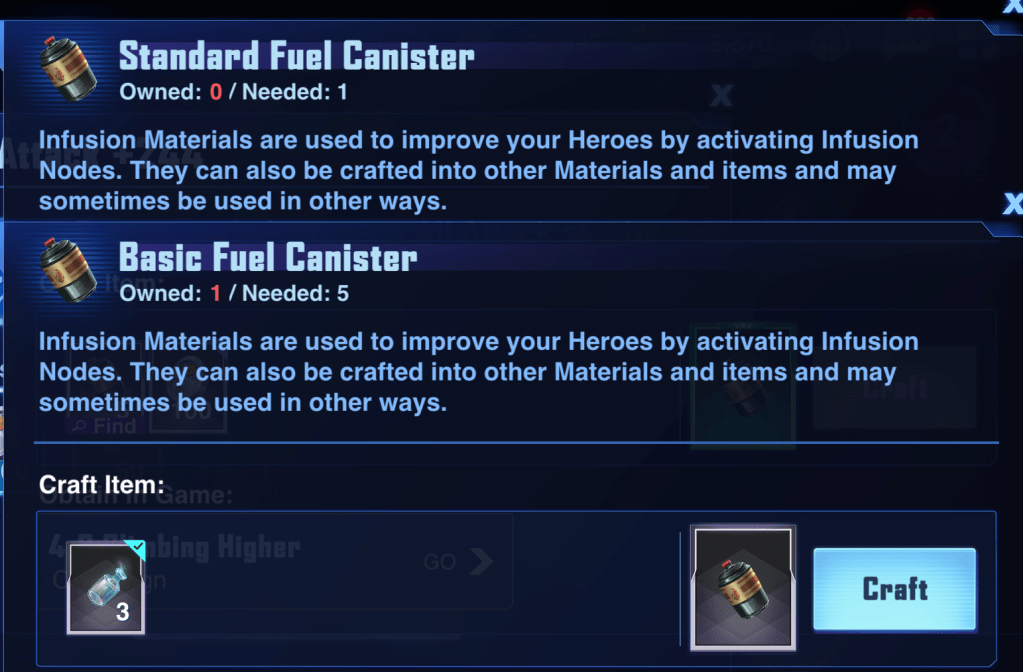
The UI is questionable here, but the system should be successful in achieving depth.

Although I initially viewed Infusions as an innovated system (and to a large degree it still is), I have become convinced that Infusions is inspired by the Character Equip system found in Heroes Charge-system RPGs like Star Wars: Galaxy of Heroes.
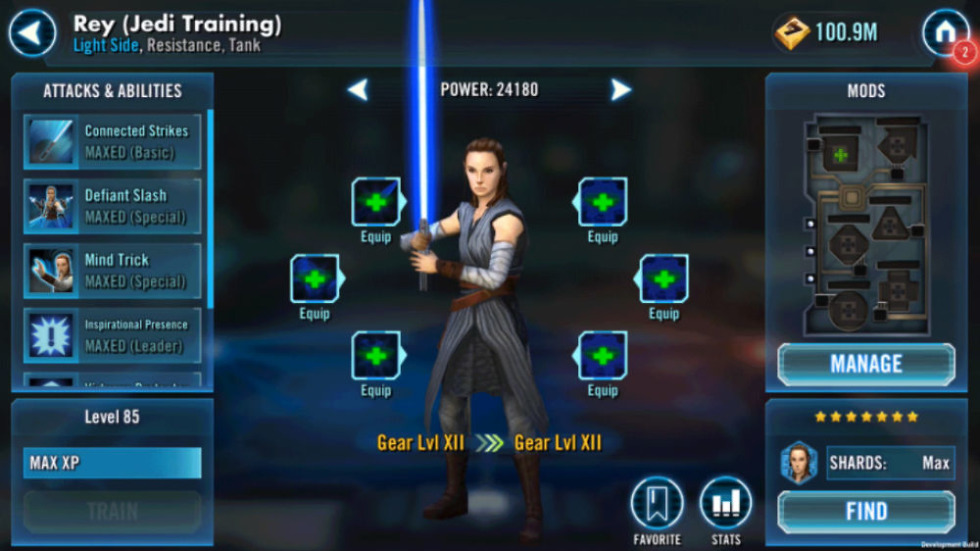
On the outside, the systems look different. But they both including finding specific items for each slot and both involve the Hero’s System Level increasing with some sort of bonus associated with it.

Many games don’t have both the Heroes Charge Gear System and the RAID Equipment System, since thematically they fill the same role. But I think that is lazy design to keep them separated, since they operate very differently. So kudos to MZ for rethinking Heroes Charge Gear and modernizing it to make it compatible with current F2P RPG systems.

Final Thoughts

The Blanket adaptation of typical F2P Hero Systems without adjusting Sales to take into account the realities and limits of Hero System depth make me worried for the long-term Monetization of Crystalborne, at least on the Hero-side. But there are other possible avenues of Monetization. Stay tuned for Part 2 of my Crystalborne review, where I discuss Gameplay modes and how they might impact current and future monetization opportunities.

Well that’s it for this week, folks. Thanks for reading! Any questions or comments are appreciated. Til next time!

Jeff

02/16/20: Why Free to Play?

Why Free to Pay?

The Free to Play (F2P) Model has already proven to be the superior business model for making profitable games. It’s next challenge is to mitigate the negative Player experiences associated with successful F2P Practices.

Mafia Wars, Farmville, Clash of Clans, Candy Crush, Game of War, Clash Royale, Idle Heroes, Pokemon Go, Fortnite, the list goes on. There have been many F2P Games that have moved the Mobile Gaming industry to where it is today, and have made a Mind-Boggling amount of money in the process.

Looking at these games, its hard to pinpoint what they have in common that made them all successful. Was it theme? Crime, Farming, Fantasy, Candy?, Roman Armies, Monsters, and whatever one might describe Fortnite as. I’ve seen less diversity of Theme in a Halloween Parade. How about Genre? RPG, Simulation, RTS, Collection, Shooter? We are all across the Board here. Fidelity and Polish? Yes, some of these titles are absolutely gorgeous. Others, not so much. So what is it about these games that have caused their incredible success?

The answer is less remarkable than people in our industry would have you believe. The one thing these games have common that define their success is that the game developers behind these games adapted their game and their designs to the economic realities of their players. I know, sexy right? All these Game Companies launched games that achieved at least some success in some of the core KPIs. But that alone, doesn’t make a game successful. It is the data-driven doubling down on what your initial successes are combined with trying to fix your weaknesses that can take a moderately successful game and make it a powerhouse. That is what each of the aforementioned games did.

A lot of people in the industry describe Game Design as a science. And it some ways it is. It relies a lot on data-driven analysis and trial and error. But fundamentally, what prevents Game Design from being a science is that there is no method or blueprint to building a game that will guarantee results. So many companies have tried to blindly copy successful games in their entirety, or successful features within a successful game. The vast majority of these efforts fail. Those that succeed only achieve limited success. So a quick tip to hiring managers: Any candidate who claims that game design is a science should immediately set off your bullshit detector.

So if Game Design is not a science, then is it an art? Perhaps. Some qualities of making good art can be found in successful Game Design: Knowing your audience, providing a compelling experience, having a social component, etc. I’m not prepared to say that Game Design is an art because I don’t think science and art should be binary choices in describing Game Design, and in the end it doesn’t matter. The point is that Game Design feels like an art, because you are constantly having to feel through decisions that can have dramatic impact on the Game’s performance without much real-time feedback (at least during the Game’s development). With so little feedback to guide decision-making, producing a game that is going to be an immediate hit with Players is a daunting (and in most cases, random) task. One cannot bank a company’s financial future blindly developing a game to be successful on Day 1.

So what is the alternative? The alternative is to design a game with enough room to allow you to respond to player feedback so you can both improve the Player experience (i.e. Retention, Engagement) as well as a Game’s Monetization. It is only guided by player feedback that we can be successful Game Developers. And that is precisely why F2P is the dominant business model of our Age. The top F2P games have all took what was initially successful for their games and created features that complimented what was working, achieving greater levels of success. It is hard to think of a different model besides F2P that could allow Game Developers this amount of agility to make the changes necessary to turn their initial successes into Powerhouses. By any indication, F2P will continue to thrive and grow as a successful business model for Gaming.

This success was not without its price–F2P Games have a notorious reputation among games. At best, they are accused of manipulating the Player Experience for the sake of boosting monetization. At worst, they are downright exploitative. While I tend to be more defensive of F2P’s legacy and merits, there is no question that some F2P Practices have been worse than others.

And that is what I’ve strove to do as a Game Designer. I whole-heartedly believe that many F2P Mechanics can be designed in a way to achieve the intended results without compromising the Player Experience more than necessary. I also am driven to understand not simply what works in a game, but why it works. F2P Game Design is the crossroads of Psychology and Economics, and learning what works and what doesn’t has been the pride and joy of my professional career. On any project I take on, I bring with me my 11+ years of experience and knowledge.

My intent for this Blog is to share snippets of what i’ve learned, and how Game Developers and Players alike should think about things as they make and play games. I apologize for the length of this initial post. Sadly my writing is generally too verbose, and my hope for future blog posts is to pass along my ideas in a much more concise manner. We shall see if I achieve that goal.

I hope you enjoy my posts. Check out more posts here and on ggDigest. I welcome and appreciate any thoughts, comments, or feedback. Feel free to email me at jwittsf@gmail.com. Farewell for now!

Welcome!

Hello! My name is Jeff Witt. I am a F2P Game Designer specializing in Game Economy. I have worked on F2P Games since near the F2P Model’s inception, over 11 years now. While I specialize in RPGs and Strategy Games, I feel confident working in any genre of game, as there are F2P Principles and best practices to be found in all genre of games. Today, I primarily consult for game companies, but I also enjoy talking shop and meeting other folks in the industry.

Why am I doing this Blog?

  • First and foremost, I want to discuss what I have learned over the last decade. The realities of game design are that you rarely are able to practice what you’ve learned in a pure form, especially as a consultant. So this Blog allows me to discuss my ideas free from the constraints of existing projects. It is the exercise in intellectual pursuits of F2P game design that is my favorite part about being a F2P Game Designer.
  • I want to continue my research and education. A fact about human nature is that we tend to get complacent over time. While my time research games typically centers around what I am doing for my clients, I hope that this Blog will spur me to look into new and different games, to find new best practices and expand on what I’ve learned already.
  • I’m not going to pretend that there is not a professional or career motive in doing this blog. There definitely us. But thankfully, Intellectualism and Professional Ambition are not mutually exclusive.

My Blog Posts will generally fall into three categories:
1. Discussion of a F2P Principle: I’ll talk about one of the main principles of F2P Games and use one or more Games as an example of the Principle.
2. Discussion of a Game Feature or mechanic: I’ll take a mechanic or feature from a popular F2P Game and discuss why it is successful.
3. Discussion of Industry Trends: I’ll briefly describe a trend going on right now and how I expect it to impact the future of the industry, both short and long term.

Don’t be surprised if you find rare, random blog posts about Food and Restaurants. While F2P Game Design is my main profession, Food and Dining is my passion. And as I’ve declined to do a Food Blog, I may feel compelled to do an odd post here if something comes to mind.

Should anyone want to reach out to discuss any of my blog posts, talk to me about consulting work, or anything else, you can email me at jwittsf@gmail.com or through my linked-in profile: https://www.linkedin.com/in/jwittsf/

I hope you all enjoy my Blog. -Jeff

Design a site like this with WordPress.com
Get started